Understanding California DUI Penalties and What They Mean for You
Facing a DUI in California: More Than Just a Ticket
Getting pulled over after a few drinks can turn an ordinary night into a legal headache. In California, the consequences stretch far beyond the flashing lights and the ride home. The state treats driving under the influence with serious weight, and the penalties can reshape your finances, your driving record, and even your freedom. If you or someone you know is staring down a DUI charge, it helps to know exactly what is at stake before stepping into a courtroom.
California DUI penalties are not a single set of fines and classes. They scale with your blood alcohol content, your history behind the wheel, and whether anyone got hurt. A first offense with a slightly elevated BAC looks very different from a third arrest or a crash that injured another person. Understanding the layers of the law, from the California Vehicle Code to the DMV's separate actions, gives you a clearer picture of what comes next.
The Basics: What Counts as a DUI
Under the California Vehicle Code, you can be charged with a DUI if you drive with a blood alcohol content of 0.08 percent or higher, or if your driving is impaired by alcohol or drugs to any degree. For commercial drivers, the limit drops to 0.04 percent, and for those under 21, it is effectively 0.01 percent. But the law does not wait for a breath test. A police officer can arrest you based on observed behavior, a failed field sobriety test, or the results of a chemical test taken after the stop.
Here is where many people get caught off guard: California's implied consent law means that by holding a driver's license, you have already agreed to submit to a chemical test if arrested on suspicion of DUI. Refusing that test triggers its own set of penalties, separate from the DUI itself. That refusal can mean a longer license suspension and, in some cases, additional fines. It is a decision that often feels like a choice in the moment, but the law treats it as a violation of the terms of your license.
First Offense: More Than a Slap on the Wrist
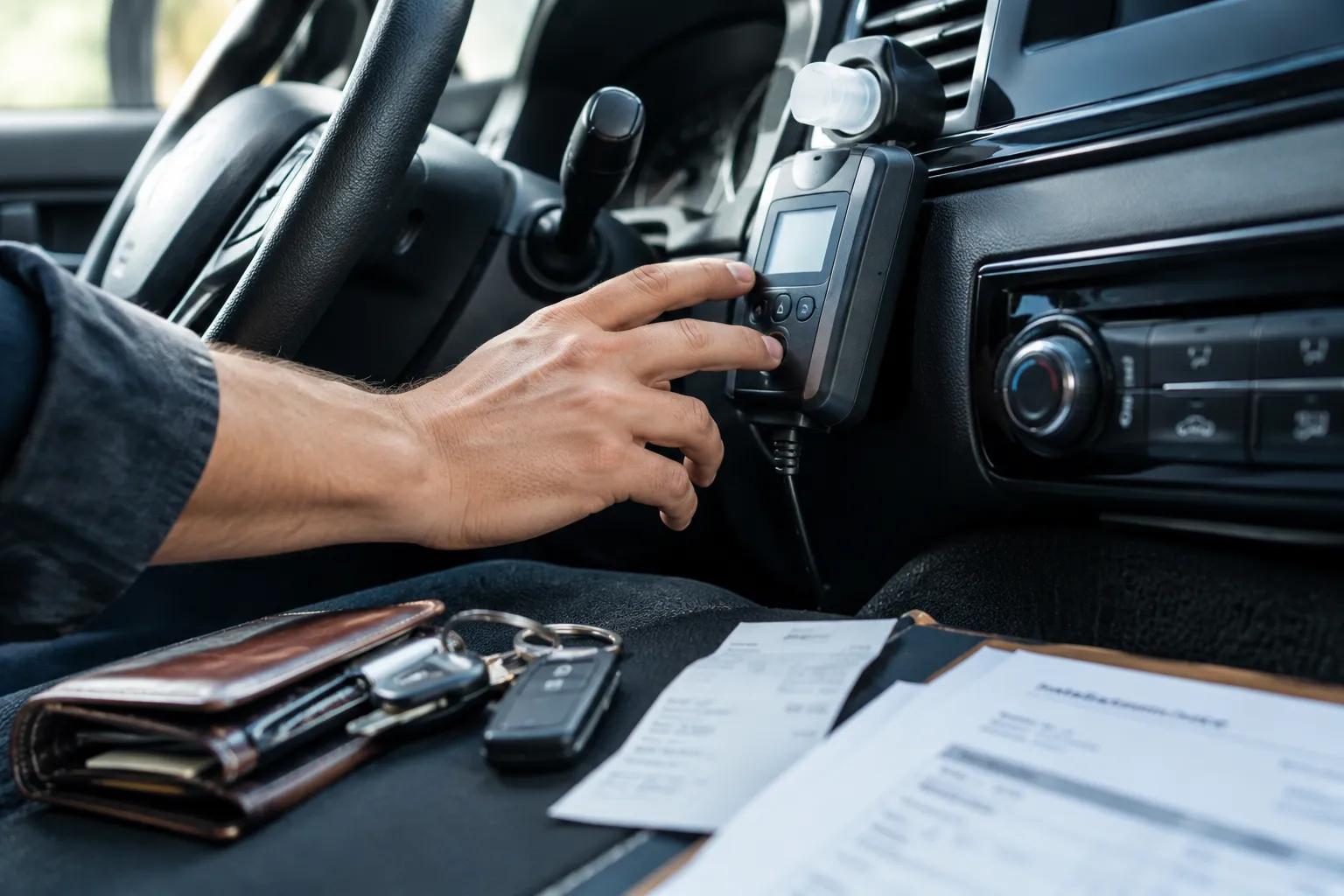
For a first DUI with no injuries and a BAC under 0.15 percent, the standard penalties include three to five years of informal probation, a fine ranging from about $390 to $1,000 plus penalty assessments that can triple the total, and a six-month license suspension. You will also be required to complete a DUI school program, typically lasting three months, and to install an ignition interlock device on your vehicle. The device requires you to blow into a breathalyzer before the car starts, and it logs your results for the court.

The DMV runs its own process alongside the criminal case. If you do not request a hearing within ten days of your arrest, your license can be suspended automatically. That administrative action happens even if your criminal case is still pending. Many people assume the DMV and the court are the same, but they are separate systems with separate timelines. Missing that ten-day window can cost you your driving privileges before you ever see a judge.
California DUI penalties for a first offense are designed to educate and deter, but they still sting. The total cost, including fines, classes, the interlock device, and increased insurance premiums, often lands in the thousands of dollars. And your insurance company will almost certainly require SR-22 insurance, a certificate that proves you carry the state-mandated liability coverage. That filing stays on your record for three years and keeps your premiums noticeably higher.
Second and Third Offenses: Escalating Consequences
Repeat offenses bring heavier weight. A second DUI within ten years of a prior conviction typically adds a mandatory jail sentence of 96 hours to one year, a two-year license suspension, and an 18-month DUI school program. The ignition interlock device remains mandatory, and probation can stretch to five years. A third offense pushes jail time to at least 120 days, and the court may consider you a habitual offender, which can mean longer sentences and stricter monitoring.
With each prior conviction, the law looks at your history, not just the current arrest. A prior conviction from several years ago can still count within the ten-year lookback window. That is why a single mistake can haunt you long after the fines are paid. The DMV also escalates its own penalties, with longer suspensions and stricter requirements for a restricted license. A restricted license, when available, lets you drive only to work, school, or DUI-related appointments, and only with the interlock device installed.
Probation in DUI cases is not passive. You will report to a probation officer, pay monthly fees, and comply with random testing. Missing a meeting or failing a test can trigger a violation hearing and additional jail time. The court can also impose sentencing enhancements if your BAC was particularly high, such as 0.15 percent or above, which adds mandatory jail days and a longer DUI school program. These enhancements are automatic in many counties, so the prosecutor does not have to argue for them.
Felony DUI: When the Stakes Rise
Not every DUI stays a misdemeanor. A DUI becomes a felony DUI if you cause injury to another person, if you have three or more prior DUI convictions within ten years, or if you have a prior felony DUI conviction. Felony charges carry state prison time, often up to three years or more, and fines that can reach $10,000 before assessments. The court may also order you to complete a 30-month DUI program, which is a significant time and financial commitment.
Felony convictions also bring collateral consequences that last beyond the sentence. You lose your right to possess firearms, your voting rights can be affected while incarcerated, and your employment prospects take a hit. Professional licenses, security clearances, and jobs that require driving can all disappear. A felony DUI is a criminal record that follows you for life, unless you pursue an expungement later. Expungement, when available, does not erase the arrest, but it can change your record from a conviction to a dismissed case after probation is completed.
How DUI Court and Alternative Programs Fit In
Some counties run DUI court, a specialized court that focuses on rehabilitation rather than pure punishment. If you are accepted, you appear before a judge regularly, submit to frequent testing, and complete treatment in stages. Successful completion can lead to reduced charges or shorter probation. But DUI court is not a softer option. It demands strict compliance, and failing out means the original penalties return in full.
For first-time offenders with no injuries, some counties offer diversion or alternative sentencing programs. These may reduce the charge to a wet reckless, which carries lighter penalties, but they are not automatic. The prosecutor has to agree, and the judge has to approve. A good DUI attorney can negotiate for these alternatives, but there is no guarantee. The decision often hinges on your BAC, your driving record, and whether you were cooperative during the stop.
The Role of a DUI Attorney and Criminal Defense
Facing a DUI without legal help is risky, especially when the system moves as fast as it does. The DMV hearing, the arraignment, the pretrial motions, and the possible trial all have strict deadlines. A DUI attorney who understands California DUI penalties can challenge the traffic stop, question the field sobriety test, and scrutinize the chemical test results. Officers make mistakes, machines malfunction, and procedures get skipped. Those errors can lead to reduced charges or even a dismissal.
Criminal defense in DUI cases is not about making excuses; it is about holding the state to its burden of proof. The prosecutor must show that the stop was legal, the testing was accurate, and the evidence was handled properly. A former prosecutor, like the team at the firm behind this article, knows exactly where the cracks are. That insider perspective can make a real difference in negotiations or at trial.
California DUI penalties are serious, but they are not the end of the road. With the right strategy, you can protect your license, your record, and your future. If you are facing a charge, act quickly. The ten-day DMV deadline, the availability of a restricted license, and the potential for a reduced charge all depend on timely decisions. Talk to an experienced DUI attorney before you say anything beyond basic information to the police, and before you sign any paperwork.

Practical Steps After an Arrest
If you have been arrested, your first move should be to request a DMV hearing within ten days. That step alone can preserve your driving privileges while your case moves through the court. Next, gather any evidence from the night of the arrest, such as receipts from the bar, witness contact information, or notes about the officer's behavior. A DUI attorney will use these details to build a defense.
You should also think about the immediate costs. The fines, the DUI school fees, the interlock device installation, and the SR-22 insurance filing all add up quickly. Budgeting for these expenses early can reduce stress later. And do not ignore the emotional side. A DUI charge can feel isolating, but you are not the first person to face it. Thousands of Californians go through this process every year, and most come out the other side with a renewed focus on safe driving.
Final Thoughts
Understanding California DUI penalties is the first step toward making smart decisions. The law is complex, and the stakes are high, but knowledge gives you leverage. Whether you are fighting the charges or preparing for the consequences, you have options. Do not let fear or embarrassment keep you from seeking help. A DUI attorney can explain the process, negotiate for better terms, and guide you through the DMV and the court system. The sooner you act, the more control you have over the outcome.